Category: Uncategorized

  • Feeling Behind in Life? How to Stop Measuring Your Life by Someone Else’s Timeline

    Feeling Behind in Life? How to Stop Measuring Your Life by Someone Else’s Timeline

    Feeling behind in life can begin quietly. There are seasons when it seems like everyone around you is moving forward. Someone gets married. Someone announces a pregnancy. Someone finally buys a home. Someone gets promoted, starts a business, moves to another country, or reaches a milestone you have quietly been hoping to reach yourself. You can be genuinely happy for them and still feel something ache inside you.

    Because somewhere between celebrating their progress and looking at your own life, a question begins to surface: Am I falling behind? Feeling behind in life can be difficult to explain because, from the outside, nothing may actually be wrong. You may be working, trying, learning, praying, growing, and doing what you can. Yet when you look around, it can seem as though everyone else received a map that you somehow missed. And little by little, you begin measuring your life not by where you have come from, but by where everyone else seems to be.

    Why Do I Feel So Behind in Life?

    Sometimes the feeling does not come from your life itself. It comes from the comparison. We rarely see another person’s entire journey. We see the promotion but not the years of uncertainty before it. We see the wedding but not the waiting that came before the relationship. We see the successful business but not every failed attempt, financial worry, or ordinary day that helped build it. Yet we compare those visible milestones with the unfinished parts of our own lives.

    Social media can make this even harder. In a few minutes of scrolling, you can see dozens of people reaching different milestones all at once. One person is traveling. Another is getting engaged. Someone else is celebrating a career breakthrough. Your mind can quietly combine all those separate lives into one impossible standard and conclude that everyone is moving ahead except you. But there is another source of pressure that can be even harder to notice: the timeline you carry inside your own mind.

    The Timeline You’re Measuring Yourself Against May Not Be Yours

    Many of us grow up with an invisible schedule for how life is supposed to unfold. By a certain age, you should know what you want to do. By another, you should have a stable career. You should have enough savings. You should be married. You should have children. You should own a home. You should be more confident, more accomplished, more certain of yourself. And when reality does not follow that schedule, it can feel as though something has gone wrong.

    But it is worth asking: Where did that timeline come from? Maybe part of it came from your family. Maybe it came from the culture around you. Maybe it came from watching your peers. Maybe it came from the younger version of you who imagined adulthood before knowing how unpredictable adulthood could actually be. Some of your expectations may still matter deeply to you. There is nothing wrong with wanting meaningful work, financial stability, marriage, family, or a life you are proud of. The problem begins when a desire becomes a deadline—and the deadline becomes evidence that you have failed. You can want something deeply without deciding that your life is late because it has not happened yet.

    Someone Else Moving Forward Does Not Mean You’re Falling Behind

    Comparison can make life feel like a race even when nobody officially declared one. When someone reaches something before you, it can feel as though the distance between their life and yours has suddenly become proof that you are losing. But another person’s progress does not automatically create your failure.

    Two people can begin from different places, carry different responsibilities, encounter different opportunities, experience different losses, and need different amounts of time to become ready for what comes next. Their path does not provide the measuring stick for yours. And perhaps this is especially important to remember when you do not have everything figured out yet. Uncertainty can make other people’s lives appear much more settled than your own, but you don’t need to have everything figured out to move forward. Your life can continue unfolding even while some of the answers are still unclear.

    What If Your Progress Is Simply Harder to See?

    We tend to notice progress when it produces something visible: a new job, a certificate, a higher income, a relationship, a house, a finished project—something you can point to and say, There. I moved forward. But some of the most important progress in a person’s life is difficult to photograph.

    Maybe you are learning to set boundaries after years of saying yes to everyone. Maybe you are rebuilding your confidence after disappointment. Maybe you are becoming more disciplined. Maybe you are learning how to manage your money. Maybe you are healing from something you rarely talk about. Maybe you are beginning again after a season that took more from you than anyone realized. Maybe you are simply learning how to keep going without needing immediate proof that your effort is working. These things may not receive congratulations. They may not look impressive online. But they are still movement.

    Sometimes growth is happening quietly beneath the surface long before your circumstances begin to reflect it. There is a quiet power in simply showing up, especially during seasons when progress feels almost invisible.

    How to Stop Feeling Behind in Life

    You may not be able to eliminate comparison completely. You are human, and sometimes another person’s life will touch the exact place where you are still waiting. But you can learn not to let comparison decide what your life means. Start by noticing the standard you are using. When you think, I should be further ahead by now, pause and ask: Further ahead according to whom? Sometimes that question alone reveals how much pressure came from expectations you never consciously chose.

    Then look at your own life with a wider lens. Instead of only asking what you have not achieved yet, ask what has changed in you over the last few years. What have you survived? What have you learned? What can you handle now that once overwhelmed you? What decisions are you making differently? What are you building that simply needs more time? It can also help to reduce the things that repeatedly trigger unhealthy comparison. That does not mean avoiding everyone who is doing well. It means paying attention to what happens inside you and creating enough space to hear your own thoughts again.

    Most importantly, resist the urge to fix your entire life because you suddenly feel behind. You do not need to catch up with everyone. You need to know what matters to you and take the next meaningful step from where you actually are. And when you genuinely do not know what comes next, sometimes all you need is the next right step.

    Your Life Is Not Late

    There may still be things you wish had happened sooner. You do not have to pretend you never wanted them. You do not have to call every disappointment a blessing before you are ready. And you do not have to silence every difficult feeling with a positive thought. But you can refuse to turn waiting into a verdict about your worth.

    A slower season is not an empty season. An unexpected path is not necessarily a wrong one. And a life that unfolds differently from the people around you is not automatically a life that has fallen behind. Sometimes the work in front of you is simply to remain faithful to the life you have been given—to keep growing, keep listening, keep taking the steps that are yours to take, and trust that God can still be at work in a story that does not look the way you once expected it to.

    You are allowed to want more for your life while still honoring where you are today. You are allowed to be a work in progress. And you are allowed to walk at a pace that does not look like anyone else’s. Your life does not have to happen on someone else’s timeline to be meaningful. It only has to be yours to live.


    Continue Your Journey

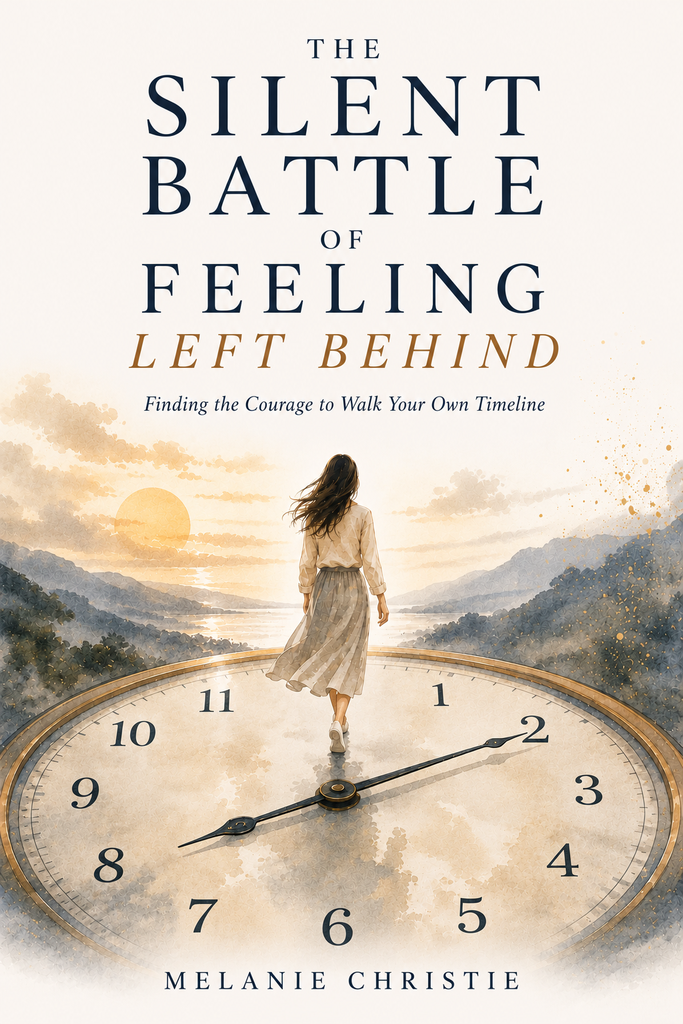
    If feeling behind has become more than a passing thought—if it has quietly affected how you see your worth, your timing, or your future—The Silent Battle of Feeling Left Behind explores this struggle more deeply and offers a gentle path toward walking your own timeline with greater courage and peace.

    Explore The Silent Battle of Feeling Left Behind →

    Or, if you would rather begin with something free, The 10 Rules of Personal Growth: A Beginner’s Handbook for Intentional Living can help you take a thoughtful first step toward becoming more intentional about your growth.

    Get the Free Guide →

  • The Quiet Power of Showing Up

    The Quiet Power of Showing Up

    There are days when showing up feels meaningful. You wake up with energy, your mind feels clear, and the work in front of you seems connected to something bigger. You can see progress happening, and that progress gives you another reason to continue.

    But many days do not feel like that.

    Sometimes showing up looks ordinary. You sit down even when you do not feel particularly inspired. You take care of something that needs to be done. You make one small decision in the right direction. You pray even when you do not have the perfect words. You return to a goal that still seems far away. Nothing dramatic happens, and there may be no visible evidence that the day mattered at all.

    Yet these quiet days often carry more power than we realize.

    We tend to notice breakthroughs because they are easy to see. We remember the day the opportunity finally arrived, the goal was reached, the answer became clear, or something we had prayed for finally came to pass. What we do not always remember are the ordinary days that came before it—the mornings when we simply continued, the small choices nobody noticed, and the moments when quitting would have been easier than taking another step.

    A life rarely changes because of one extraordinary day. More often, it changes because ordinary days begin to point in the same direction.

    This is why showing up matters.

    Showing up does not mean performing at your best every single day. It does not mean forcing yourself to be productive when your body needs rest or treating exhaustion as proof of commitment. Sometimes showing up means doing the work. Sometimes it means doing less, but doing what matters. Sometimes it means resting so that you can return with strength instead of continuously running yourself empty.

    The important thing is that you keep returning to what matters.

    There is something powerful about returning. You may lose momentum. You may become discouraged. You may have a week when very little gets done. You may question whether the goal is still possible. But one difficult season does not erase the direction you have chosen. You can begin again without turning the interruption into a verdict about who you are.

    You do not need a perfect streak to build a meaningful life.

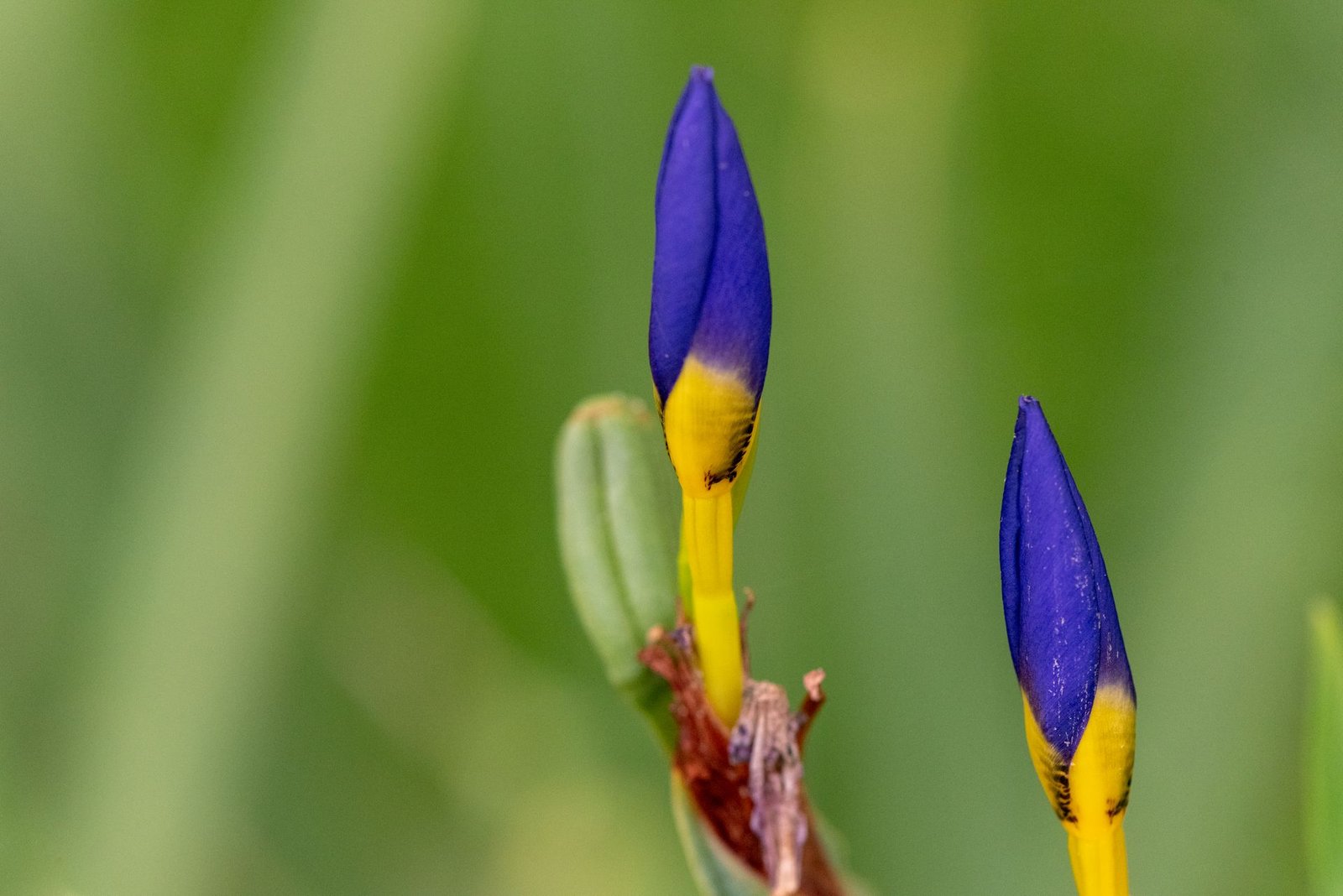
    Think about a flower before it blooms. For a long time, there may only be a small bud. If you judged the plant only by what you could see in that moment, you might think very little was happening. But growth is already taking place. The bud does not need to force itself open overnight. It continues receiving what it needs, developing quietly until the time comes for what has been forming inside to become visible.

    Much of our growth happens this way too.

    We want evidence that our efforts are working. We want to know that the hours we spend learning, building, praying, practicing, healing, or trying again will eventually lead somewhere. But growth does not always announce itself while it is happening. Sometimes the only thing we can do is continue caring for what has been entrusted to us.

    Jesus often used the image of seeds when teaching about the Kingdom of God. In one parable, He described a man scattering seed on the ground and then continuing with ordinary life while the seed grew, even though the man did not fully understand how it was happening (Mark 4:26–29).

    There is something comforting in that picture.

    The farmer had a responsibility: he scattered the seed. But he did not stand over the soil demanding immediate evidence of growth. There were processes happening beneath the surface that were beyond his control.

    We need that reminder when we become impatient with our own lives.

    There are things we are responsible for, and there are things we are not. We can plant. We can water. We can learn. We can practice. We can make wise decisions. We can keep showing up. But we cannot control every result, every opportunity, every timeline, or every season.

    That is where faith changes the way we work.

    Showing up faithfully allows us to do our part without pretending that everything depends on us. We can work seriously without carrying the impossible burden of controlling the outcome. We can bring our effort to God and trust Him with what happens beyond it.

    Some seasons will produce visible fruit quickly. Others may feel painfully slow. There may even be times when you wonder whether anything is changing at all. But slow progress is still progress, and hidden growth is still growth.

    One day, you may look back and realize that the person capable of carrying what you once prayed for was being formed during those ordinary days.

    It happened while you kept your commitments when nobody was watching. It happened when you chose to try again after disappointment. It happened when you learned to work without needing constant excitement. It happened when you stopped waiting to feel completely ready and simply took the next step available to you.

    Showing up quietly builds something deeper than momentum. It builds character.

    And character often grows long before the results become visible.

    So if today does not feel remarkable, it does not have to be. You do not need every day to become a breakthrough. You do not need to constantly prove that you are moving fast enough. You only need to remain faithful to the direction you know you should be walking.

    Do what you can today. Take care of what has been placed in front of you. Rest when rest is needed. Begin again when you have wandered. Pray. Plant. Water. Continue.

    The flower does not bloom every day. But every day of quiet growth is part of the blooming.


    Continue Your Journey

    Growth is rarely about changing everything at once. More often, it begins with one intentional choice, repeated over time.

    If you’d like a simple guide to help you keep moving forward with greater intention, you can begin with The 10 Rules of Personal Growth.

    Get the Free Guide →

  • You Don’t Need to Have Everything Figured Out to Move Forward

    You Don’t Need to Have Everything Figured Out to Move Forward

    There is a quiet pressure that often comes with adulthood: the feeling that by now, you should know what you are doing. You should have a clear direction, a stable plan, and a confident answer when someone asks where your life is headed. At a certain age, uncertainty can begin to feel less like a normal part of life and more like evidence that you have somehow fallen behind.

    But life rarely unfolds with that kind of certainty. Even people who appear to have everything figured out are often making decisions with incomplete information. Plans change. Opportunities disappear. New possibilities emerge. Priorities shift. Sometimes the future we imagined for ourselves no longer fits the person we have become. And sometimes we simply reach a season where the road ahead is not as clear as we hoped it would be.

    That uncertainty can be uncomfortable, especially when you are someone who likes to think carefully before making decisions. You may believe that if you can just think long enough, research enough, pray enough, or consider every possible outcome, eventually you will arrive at a level of certainty that makes moving forward easy. Sometimes clarity does come that way, but often, it does not. There are things we can only understand after we begin moving.

    A new job may teach you what kind of work matters to you. A project may reveal strengths you did not know you had. A difficult season may clarify what you value. A conversation may change the way you see an opportunity. Even a decision that does not work out exactly as planned can give you information you could never have gained by standing still and thinking about it.

    This is why waiting until everything makes sense can quietly keep us stuck. We tell ourselves we are waiting for clarity, when sometimes what we are really waiting for is certainty. And those are not the same thing. Clarity means knowing enough to take the next step. Certainty means wanting to know exactly where that step will lead before taking it. The first is often possible. The second rarely is.

    Think about how many important decisions in life come without guarantees. You can prepare carefully for a career and still discover that you want something different years later. You can make a thoughtful financial decision and still encounter circumstances you could not predict. You can begin building something meaningful without knowing whether it will succeed exactly as you imagined. Wisdom matters. Preparation matters. Discernment matters. But none of them give us complete control over what happens next.

    At some point, living requires us to move with what we know while accepting that there will always be things we do not know yet. The story of Abraham offers a striking picture of this kind of movement. When God called him to leave his homeland, Abraham was not given a complete explanation of everything that would happen along the way. Hebrews 11:8 describes how he obeyed and went even though he did not know where he was going. Abraham was not simply wandering without direction. He had something more important than a complete map: he had a call to follow.

    There is something deeply reassuring about that because we sometimes imagine faith as reaching a point where all our questions disappear. But biblical faith often looks very different. It looks like obedience while questions remain. It looks like trusting God while the outcome is still hidden. It looks like taking the part of the journey that has been revealed without demanding to see every mile ahead.

    You may not be standing in a dramatic Abraham-like moment. Your uncertainty may be about something ordinary: whether to begin a project, apply for an opportunity, learn a new skill, change a habit, save money, repair a relationship, or simply continue doing the work already in front of you. But the principle remains useful. You do not always need the entire plan in order to make meaningful progress.

    Sometimes the desire to figure everything out is also our attempt to protect ourselves from making mistakes. If we could somehow predict every outcome, perhaps we could choose perfectly. We could avoid disappointment, wasted effort, embarrassment, or regret. But no amount of planning can remove every possibility of getting something wrong.

    There will be decisions you reconsider. There will be plans you adjust. There may even be paths you begin only to realize later that they are not where you are meant to stay. That does not automatically make those seasons wasted. They may teach you something, strengthen you, redirect you, or prepare you for something you could not yet see. Growth is not always a straight line from uncertainty to certainty. Sometimes it is a gradual process of becoming wiser as you go.

    Recognizing this can change the questions you ask yourself. Instead of wondering how you can make sure you never choose wrongly, you can begin asking how you can become someone who responds wisely even when life does not go according to plan. Instead of needing to know exactly where you will be five years from now, you can pay attention to what is yours to steward today.

    Consider what is already in front of you. There may be a responsibility that needs your attention, an opportunity that deserves serious consideration, a habit that needs to change, or something meaningful you have been postponing because you are waiting to feel completely ready. There may also be a direction that continues to matter to you even after the initial excitement has passed. Paying attention to these things brings you back to the life you are actually living rather than the future you are trying to predict.

    There is freedom in realizing that your job is not to predict your entire future. You are responsible for the choices available to you now—for seeking wisdom, acting with integrity, learning, preparing, praying, and paying attention. Tomorrow will eventually bring information that today simply cannot give you, and when tomorrow comes, you can respond to what it brings.

    This does not mean becoming careless about the future. You can still have goals, make plans, think years ahead, and work patiently toward something meaningful. But your plans do not have to become a demand that life unfold exactly according to your expectations. You can hold direction firmly while holding the details with open hands.

    Perhaps that is one of the quieter forms of maturity: learning to move without pretending that you know everything and learning to trust without requiring God to explain everything first. You may still have unanswered questions about your work, relationships, finances, purpose, or future. Some of those answers may take time. Others may arrive in ways you never expected.

    For now, you do not need to solve your entire life. Pay attention to what you already know, seek wisdom for what you do not, and make the best decisions you can with what has been entrusted to you. When the path becomes clearer, you can adjust accordingly. You are allowed to still be learning while you build, and you are allowed to keep moving even when parts of the road remain unknown.

    You do not need the whole map before you begin. Sometimes enough direction for today is exactly what you need to take your part of the journey faithfully. The rest can become clearer as you walk.


    Continue Your Journey

    If you’re learning to grow with greater intention even when life still feels uncertain, you may also enjoy The 10 Rules of Personal Growth—a short guide created to help you build a more thoughtful and intentional approach to growth.

    Get the Free Guide →

  • When You Don’t Know What to Do Next: Start With the Next Right Step

    When You Don’t Know What to Do Next: Start With the Next Right Step

    There are seasons in life when you know something needs to change, but you are not entirely sure what should come next. Maybe you have outgrown where you are, but you cannot yet see where you belong. Maybe a plan you were counting on did not work out. Maybe you have several possibilities in front of you, yet none of them feels certain enough to choose. Or perhaps you simply have the quiet sense that there is more ahead of you, even though you cannot see what that “more” looks like yet.

    These seasons can be uncomfortable because we naturally want clarity. We want to know where we are going, how long it will take, and whether the decision we are about to make will turn out to be the right one. There is also a strange pressure that comes with adulthood—the feeling that by now, we should know what we are doing. We think we should have a clear direction, a solid plan, and a confident answer when someone asks what comes next. When we do not, uncertainty can begin to feel like failure.

    So we wait. We wait until we feel completely ready. We analyze every possible outcome. We look at what other people are doing and wonder whether their choices might reveal something about our own. We search for a level of certainty that life often cannot provide. But needing to know everything before taking one step can keep us standing still for far longer than necessary.

    You do not always need to know exactly where the road ends in order to begin walking.

    We often imagine clarity as something that arrives before action. First, we will figure everything out. Then, once we are certain, we will move. But many times, life works in the opposite direction. You try something, and it teaches you what fits. You have a conversation, and something becomes clearer. You begin learning a skill and discover an interest you did not know you had. You take one small opportunity, and it leads to another possibility you could not have seen from where you started.

    Movement gives us information that thinking alone cannot always provide. This does not mean making reckless decisions simply for the sake of doing something. It means recognizing that thoughtful action can sometimes reveal what endless analysis cannot. The next step may not answer every question. It may simply give you a better place from which to ask the next one.

    When we feel uncertain about our lives, our minds tend to ask enormous questions. What am I supposed to do with my life? What if I choose the wrong path? How am I going to make everything work? Those questions can become so large that we feel unable to do anything at all.

    Sometimes it helps to replace them with a smaller question: What is the next right thing I can do from where I am?

    Perhaps it is sending one application instead of figuring out your entire career. Perhaps it is saving a small amount of money instead of solving your whole financial future. Perhaps it is finally beginning the project you have been thinking about for months. It could be having a conversation you have been avoiding, setting a necessary boundary, asking for help, learning something new, or simply completing the responsibility already in front of you.

    Small steps can feel insignificant when we are focused on the distance still ahead. But a direction is built through steps, and a life is built the same way.

    There is a verse in Psalm 119 that describes God’s Word as “a lamp for my feet, a light on my path” (Psalm 119:105, NIV). I love the image of a lamp because a lamp does not illuminate miles of road at once. It gives enough light to see where you are standing and where your next steps can go.

    Perhaps there is wisdom in that. We often ask God to show us the entire plan because seeing everything would make us feel safer. We want reassurance that if we take this step, the next ten will work out exactly as we hope. But faith would require very little trust if we could already see everything ahead.

    Sometimes God’s guidance is not a complete explanation of where your life is going. Sometimes it is enough clarity to know what you should faithfully do today. The rest may become visible when you reach it.

    When everything feels uncertain, begin with what is already clear. What responsibility is already in front of you? What have you been avoiding even though you know it needs your attention? What small action would move you toward the kind of life you want to build and the kind of person you want to become?

    And perhaps most importantly, what happens when you bring the decision to God instead of carrying the entire weight of it alone?

    You may not receive an immediate answer. You may still have questions afterward. But prayer can shift the question from How do I control everything that happens next? to What am I being asked to do faithfully from where I am?

    Those are very different questions. One demands certainty about the future. The other asks for faithfulness in the present.

    There will probably always be parts of your future that you cannot see. That does not mean you are lost. Sometimes you are simply standing at a part of the journey that has not unfolded yet.

    You can still prepare. You can still learn. You can still pray, discern, make wise decisions, and take responsibility for what is within your control. And then you can move—not because you know exactly how everything will turn out, but because the next step has become clear enough to take.

    You may not know exactly where the road will lead yet. You only need enough light for the step in front of you.

    Take it faithfully. Then let the next step reveal itself when you get there.


    If you’re learning to move forward with greater intention, you may also enjoy The 10 Rules of Personal Growth—a short guide created to help you build a more thoughtful and intentional approach to growth.

    Get the Free Guide →

  • Welcome to Mind Odyssey: Why I Created This Space

    Welcome to Mind Odyssey: Why I Created This Space

    There comes a moment in many of our lives when we realize that we are not simply looking for more information. We are looking for direction—not because we lack intelligence or because we have failed to figure life out, but because life has a way of asking questions that facts alone cannot answer.

    How do we keep going when progress feels slow? How do we move forward after disappointment? How do we wait without feeling as though life is passing us by? How do we find peace while carrying uncertainty about what comes next?

    These are questions I have wrestled with myself. Like many people, I have gone through seasons of feeling behind, questioning my direction, carrying anxiety, and wondering whether I was doing enough. I know what it is like to compare your timeline with someone else’s, to wonder whether you have missed opportunities, and to hope that one day everything will finally make sense.

    Over time, I began to understand that personal growth was not about becoming a completely different person overnight. It was not about chasing perfection or trying to fix every area of life all at once. Growth, I discovered, is often much quieter than that. It happens one intentional step at a time.

    That realization slowly changed the way I approached my own life. Instead of trying to control the entire journey, I learned to pay attention to the step in front of me. Instead of demanding immediate answers, I learned that I could keep moving even when I could not yet see the whole path. And instead of measuring my life only by how quickly I was progressing, I began to value something more important: direction.

    Those lessons eventually became more than personal reflections. They became part of the reason Mind Odyssey exists.

    I created this space because I believe many of us are asking similar questions. We do not always need louder motivation or another voice telling us to hurry, achieve more, or become more. Sometimes, what we need is a quiet place to think honestly, reflect deeply, regain our direction, and continue growing.

    That is what I hope Mind Odyssey can be—a companion in growth. A place that reminds you that meaningful change does not always look dramatic from the outside. Sometimes it looks like making one wiser decision, seeing an old struggle differently, beginning again after disappointment, trusting God when you cannot yet see where the road leads, or simply choosing not to give up on the person you are becoming.

    Here in the Reading Room, you will find reflections on personal growth, intentional living, emotional resilience, faith, purpose, and the many quiet seasons that shape us. Some articles may encourage you. Others may invite you to look at something from a different perspective. My hope is not that you leave with every answer, but that you leave with a little more clarity, hope, or courage for whatever step comes next.

    Mind Odyssey has also grown beyond these articles. After months of writing, reflecting, editing, and praying, I am grateful to have released its first ebook, The Silent Battle of Feeling Left Behind. It was written for anyone who has looked around and wondered why everyone else seems to be moving forward while their own life feels delayed. It is a subject close to the heart of Mind Odyssey because growth becomes much harder when we are constantly measuring our lives against someone else’s timeline.

    But whether you begin with an article, an ebook, or simply a few quiet minutes here, there is no need to consume everything at once. You do not need to change your whole life this week. You do not need to have every answer before you begin moving forward.

    Start where you are. Read something that speaks to the season you are in. Reflect on what it brings to the surface. Take one intentional step, however small it may seem, and allow tomorrow’s step to come tomorrow.

    Growth has never been about arriving all at once. Much of it happens slowly—in ordinary days, repeated choices, changed perspectives, quiet prayers, and small acts of courage that may not seem significant until we look back and realize how far they have carried us.

    Thank you for being here. Whether this is the only article you ever read or the beginning of a much longer journey with Mind Odyssey, I hope you find something here that helps you move forward with greater clarity, courage, and faith.

    Welcome to Mind Odyssey.

    Keep growing, and keep taking one intentional step at a time.


    Cover of The Silent Battle of Feeling Left Behind

    The Silent Battle of Feeling Left Behind

    Finding the Courage to Walk Your Own Timeline

    A deeper exploration of comparison, delayed dreams, uncertainty, and learning to move forward on your own path.

    Explore the Book →

    You can also begin with the free guide, The 10 Rules of Personal Growth, created as a simple starting point for intentional living.

    Get the Free Guide →

    Wherever you begin, I hope these resources help you keep moving in the right direction—one faithful step at a time.